













KingHills Login: Quick Access Tips for New Players in 2026
Quick Access to Your KingHills Account
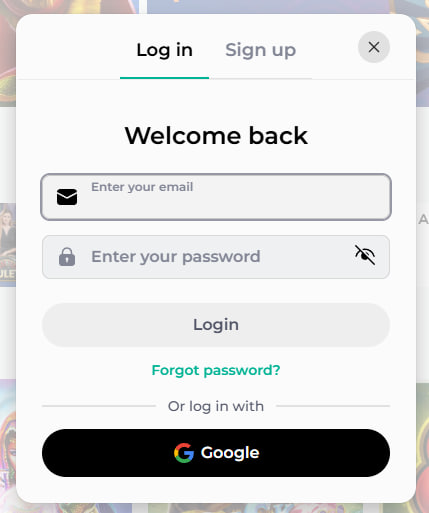
Many new players assume that signing in to an online casino is complicated — multiple verification screens, confusing menus, long wait times. The KingHills login process is built around the opposite idea: get you inside, playing, and enjoying the platform in under a minute. Whether you're returning after a break or sitting down for the very first time, access is designed to feel effortless.
Once you're signed in, your entire world opens up. From your personal dashboard you can browse our full game library, claim your welcome bonus, manage deposits and withdrawals, review your transaction history, and reach our live support team — all from one place. Getting started is simple, and we've streamlined every step so you can focus on what actually matters: the games.
How to Log In to KingHills: Step-by-Step
We've designed the sign-in flow to take four straightforward steps. No technical knowledge required. If you can fill out a form and click a button, you're already qualified.
Step 1: Go to KingHills
Open your preferred browser and navigate to kinghillscasino777.com. Once the homepage loads, look toward the top-right corner of the screen — you'll find the Log In button clearly displayed in the main navigation bar. We keep it visible and accessible on every page, so you're never hunting around for it.
Bookmark the official address now to avoid mistyping it in the future. Using the correct URL every time is your first line of defence against phishing sites that mimic casino platforms.
Step 2: Enter Your Credentials
Clicking the login button opens a compact sign-in panel. Enter the email address you registered with, followed by your password. Both fields are clearly labelled, and the password field includes a visibility toggle so you can double-check what you've typed before submitting — a small detail that prevents a lot of unnecessary frustration.
If you registered using a username rather than an email, use that instead. Not sure which one you used? Check your original registration confirmation email — we send one automatically the moment your account is created.
Step 3: Two-Factor Authentication
If you've enabled two-factor authentication (2FA) on your account — which we strongly encourage — you'll be prompted for a one-time verification code after entering your credentials. This code is sent to your registered mobile number or generated by an authenticator app like Google Authenticator, depending on your setup preference.
The code expires within a short window, so enter it promptly. If it expires before you submit, simply request a new one. This extra layer means that even if someone else obtained your password, they still couldn't access your account without your physical device.
Step 4: Access Your Account Dashboard
Once authenticated, you land directly on your personal dashboard. From here, your account balance is displayed at the top, and you can navigate to the game lobby, your active bonuses, cashier section, or support — all within one or two clicks. We've kept the layout clean and intuitive so that even players who have never used an online casino before can find what they need without a tutorial.
Your first step after logging in as a new player? Head to the bonus page to check what's currently available. Limited time only — our welcome offers rotate regularly, and you don't want to miss a window that's open right now.
Troubleshooting Login Issues
Even on a platform built for simplicity, the occasional login hiccup happens. Here's how to resolve the most common ones quickly — without needing to contact support in most cases.
Forgot Your Password
Forgetting a password is one of the most common things that happens to new players, especially in the first few weeks. The recovery process is quick and fully self-service:
- Click the "Forgot Password?" link located directly below the login fields on the sign-in panel.
- Enter the email address associated with your KingHills account and click Submit.
- Check your inbox for a password reset email — it typically arrives within a few minutes. If you don't see it, check your spam or junk folder.
- Click the secure reset link in the email, create a new KingHills password, and log in immediately using your updated credentials.
The reset link is time-sensitive, so act now before it expires — most links remain valid for 30 minutes. If yours expires, simply restart the process from Step 1.
Account Locked
Your account may be temporarily locked after several consecutive failed login attempts. This is an automatic security measure designed to protect you — not a punishment. It typically activates after five incorrect password entries within a short period.
In most cases, a brief waiting period of 15–30 minutes is enough for the lock to lift automatically. If your account remains inaccessible after that window, reach out to our live chat support team — available around the clock — and they'll verify your identity and restore access promptly. Have your registered email address and any recent transaction reference ready to speed up the verification process.
Browser Issues
Sometimes the problem isn't your credentials — it's your browser. Outdated cached data or corrupted cookies can interfere with the login page loading correctly. Start by clearing your browser cache and cookies, then reload the page and try again.
We support all major modern browsers including Chrome, Firefox, Safari, and Edge. If you're using an older browser version, updating it often resolves display and functionality issues instantly. Alternatively, switching to a different browser for a quick test will confirm whether the issue is browser-specific.
Keeping Your KingHills Account Secure
Your account holds real money, personal data, and your entire gaming history. Protecting it takes about five minutes of setup and saves a great deal of trouble down the line. Here's what we recommend for every player.
Strong Passwords and Regular Updates
A strong KingHills password is at least 12 characters long and combines uppercase letters, lowercase letters, numbers, and at least one special character. Avoid anything obvious — your name, birthdate, or the word "password" are among the first things automated attacks try. Use a unique password that you don't use on any other site.
Consider updating your password every few months as a general habit. It's a small effort with a meaningful impact on your overall account safety.
Two-Factor Authentication and Safe Logout
We've already mentioned 2FA in the login steps — but it's worth repeating here because it's genuinely the single most effective security upgrade you can make. Enable it from your account settings today. Don't wait until something goes wrong.
On shared computers — at a library, a friend's house, or a work machine — always log out manually after your session. Don't rely on the browser closing to end your session automatically. Use the logout button in your account menu every single time.
Monitoring Your Account Activity
Check your account's login history periodically — you can find this in your security settings. If you notice a login from an unfamiliar device or location, change your password immediately and contact support. Early detection makes all the difference.
Mobile Login Made Simple
Most of our players access the platform from a phone or tablet, and we've made sure the mobile experience matches the desktop version in every meaningful way.
Logging In via Mobile Browser
Open Safari, Chrome, or any modern mobile browser and navigate to kinghillscasino777.com. The site is fully responsive — it adapts automatically to your screen size without any loss of functionality. The login button appears in the same top-right position as on desktop, and the sign-in panel works identically.
Enable the "Remember Me" option on your personal device to skip re-entering your credentials every session. Just make sure you're on a device only you use before activating this option.
Using the KingHills App
For the smoothest mobile experience, we recommend downloading the KingHills app. It's optimised specifically for touchscreens, loads faster than the browser version, and supports biometric login — meaning you can sign in with your fingerprint or Face ID in a single tap.
Biometric authentication is both faster and more secure than typing a password each time. Once set up, your first step each session is simply looking at your phone or pressing your thumb to the sensor. Act now before you spend another session typing credentials manually — setup takes less than two minutes.
Biometric and One-Tap Login Options
Beyond fingerprint and Face ID, the app also supports one-tap login for returning users on trusted devices. This uses a secure token stored locally on your device — your actual password is never saved in readable form. It's the kind of convenience that makes the difference between a quick five-minute session and skipping it altogether because logging in felt like too much effort.
Login Methods at a Glance
We offer several ways to access your account, each suited to different devices and preferences. Here's a clear comparison to help you choose what works best for your setup.
| Login Method | Availability | Security Level |
|---|---|---|
| Email + Password | Desktop & Mobile Browser | Standard — recommended with 2FA enabled |
| Email + Password + 2FA Code | Desktop & Mobile Browser | High — two-layer verification |
| Mobile App Login | iOS & Android App | High — encrypted session token |
| Biometric (Fingerprint / Face ID) | KingHills App on supported devices | Very High — device-level authentication |
| One-Tap Login (Trusted Device) | KingHills App | High — secure local token, no password stored |
For everyday use on your personal phone, biometric login via the app is the option we see most players settle on — it's fast, secure, and removes the friction of typing credentials entirely. For desktop sessions, pairing your password with 2FA gives you a strong, reliable combination.
Ready to Play — Your Next Step
Signing in to your account should never be the hard part of your day. With four clear steps, multiple login methods, and a support team available around the clock, we've made sure it isn't. Whether you're on a laptop at home or a phone on the go, access to everything you need is moments away.
Already have an account? Head straight to the login page and you'll be inside in under a minute. New to the platform? Don't wait until later — create your KingHills account now and take advantage of the welcome offers currently live on the site. Limited time only, and the sooner you're signed up, the sooner you're playing.
We're here to make every part of your experience straightforward — from your very first login to your most recent session. Welcome to KingHills.